
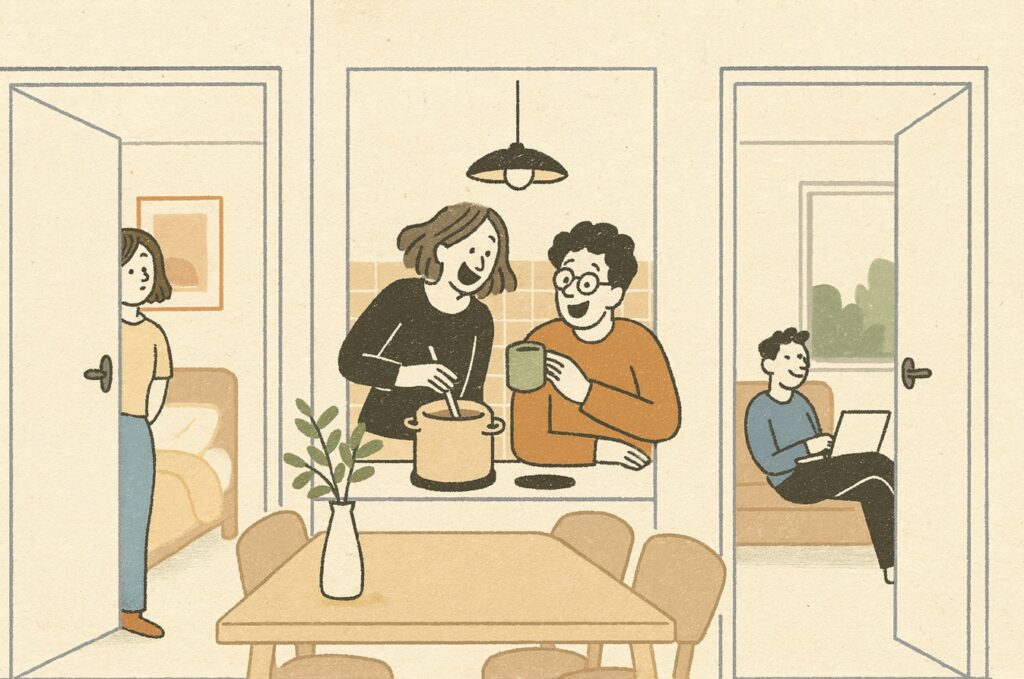
The strategy balances economic feasibility and tenant privacy, making this a highly cost-effective and practical split.
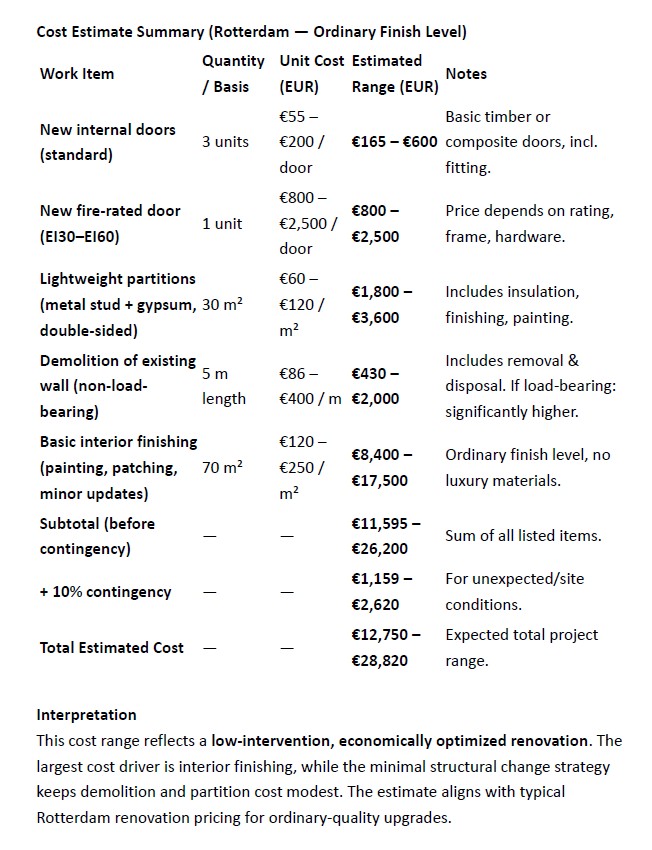
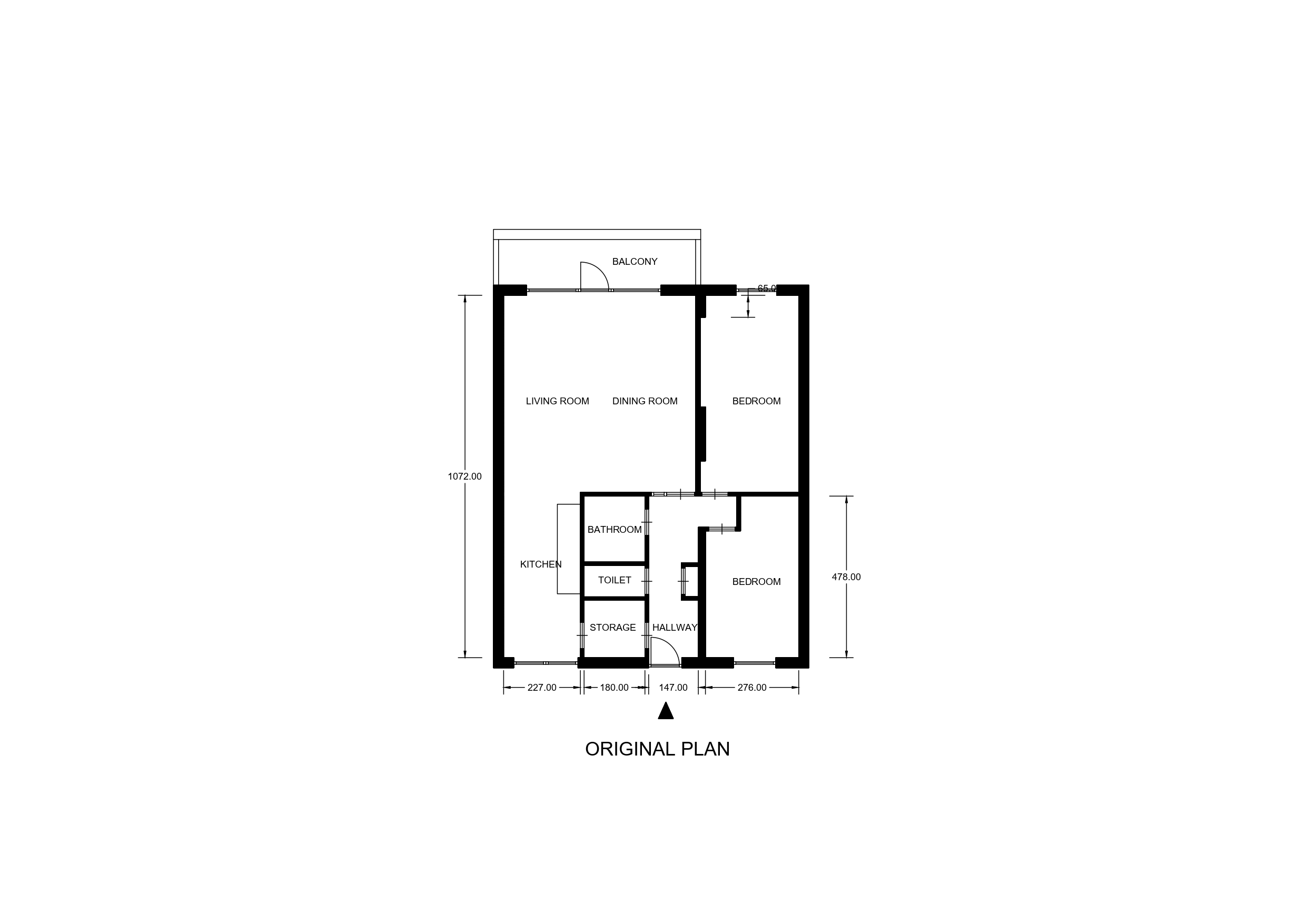
The design transforms the existing 93 m² apartment into two dwelling units while maintaining shared access to the kitchen, bathroom, toilet, and storage. By preserving most load-bearing walls and aligning new partitions with the original layout, the proposal minimizes demolition, structural intervention, and service rerouting. This low-impact approach reduces construction costs and shortens the renovation timeline.
Each unit receives its own bedroom and living area, creating clear spatial boundaries and ensuring privacy. Shared service spaces remain centrally located, allowing efficient circulation and avoiding duplicated plumbing and ventilation. New openings and lightweight partitions are added only where essential to define entries and internal organization.
Overall, the design achieves a pragmatic balance: two functional units with distinct private domains supported by compact shared facilities that optimize space and budget. The minimal-change strategy enhances feasibility, reduces waste, and delivers a sustainable, economically sound configuration suitable for multi-tenant living.
Stem op je favoriete ontwerp
Stemmen gesloten.

